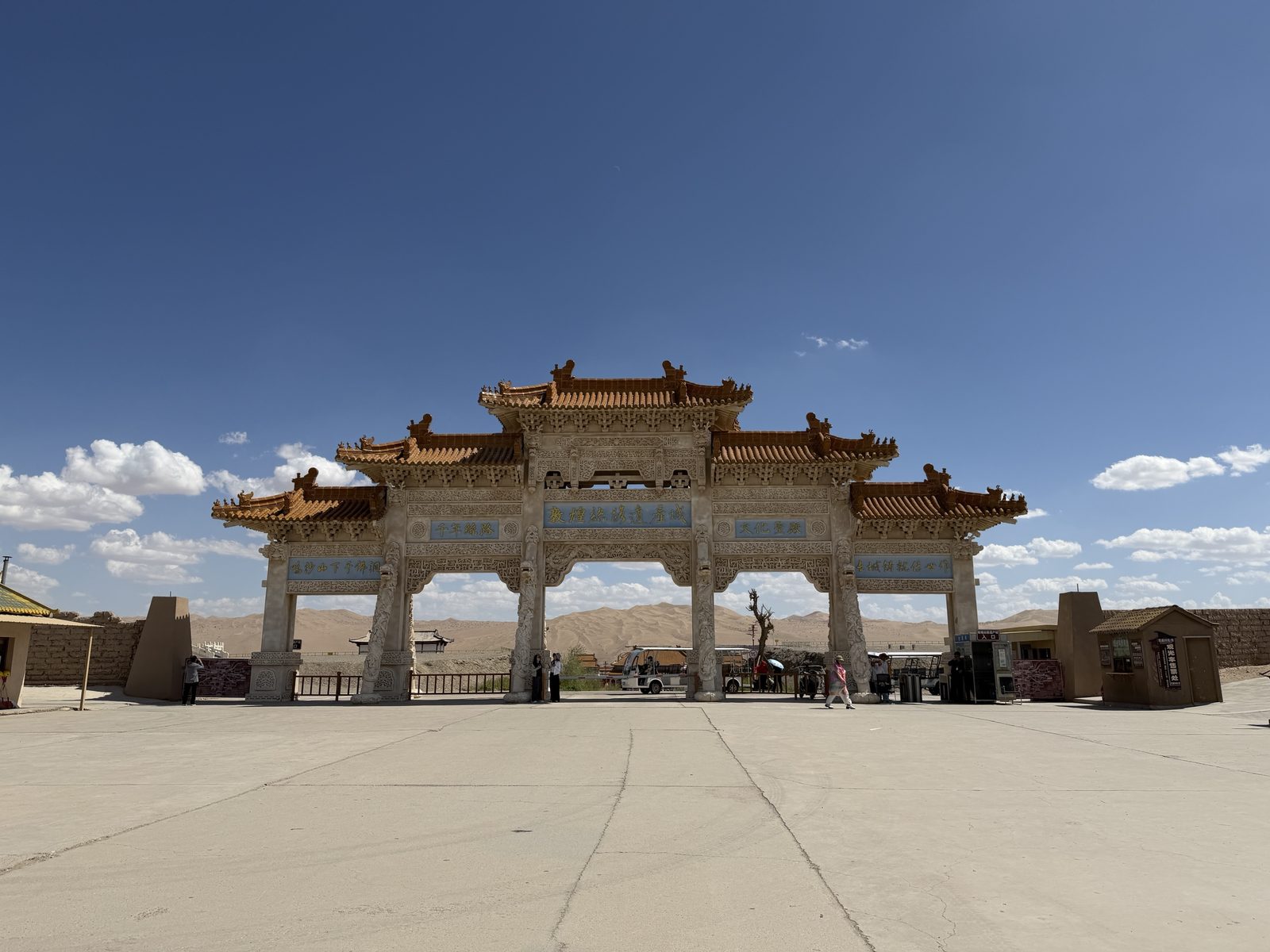
Entrance gate of the Dunhuang Silk Road Heritage City with sand dunes behind
Itinerary

Silk Road itinerary: Dunhuang & Zhangye in 4 days

  • 4 days
  • 12 stops
  • Aug 2026
  • Updated October 2026

I was so excited about this part of the trip. I love deserts. It's a landscape I always find fascinating and relaxing at the same time. And the Gobi is one of those names you learn in geography class, a beige patch on the map somewhere between China and Mongolia, so remote it might as well be made up. Then a short flight from Shanghai and there you are, with sand in your shoes, thinking: hang on, this place actually exists? Somewhere, my geography teacher is very proud.

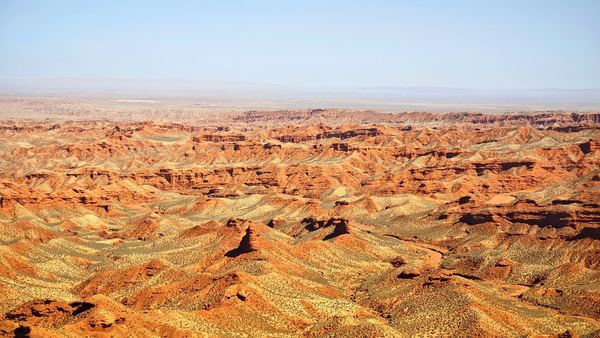
This is the Silk Road. I travelled this part of the trip with a friend, and for a few days we were immersed in the Gobi Desert, a completely different scenery and a China you don't expect. When you think of a desert you think of the Sahara or the Middle East, but not many people know that China shares the Gobi with Mongolia. And the dunes here are really high and impressive.

A hidden gem, for now. In three days we could count the other foreign travellers on the fingers of one hand. I spotted a few at Mati Temple, but in the desert, none at all. This route is still off the radar for international tourists, so if you want to go before it becomes a mass destination, this is the right time.

Before you book · trains, tickets & peak season

The Silk Road leg of our China trip: a quick flight from Shanghai into the Gobi desert, a night in an oasis resort in Dunhuang, a late sleeper train across Gansu to Zhangye, and two nights among the rainbow mountains before flying on to Chongqing.

How it fits together: Shanghai → Dunhuang by plane (take the earliest flight, you land before lunch and gain a full afternoon) · Dunhuang → Zhangye by train · Zhangye → Chongqing by plane.

How we booked everything. We booked all our flights, including the internal ones, the train and every attraction ticket on Trip.com. It's very reliable and we didn't have a single issue.

The train. There are only around three trains a day between Dunhuang and Zhangye, and Chinese train tickets only go on sale 15 days before departure. On Trip.com you can pre-book earlier than that. You pay upfront, and when sales open they try to get the class and type of ticket you chose. If they can't, you get your money back. You can also book on 12306, the official China Railway website, but you need to verify your passport there and it doesn't always work. To avoid any issue with the booking, we suggest Trip.com.

August is peak season. Summer is when Chinese travellers are on holiday, so book all the attractions in advance, especially the Mogao Caves (here is the ticket for international visitors). Entry is in timed slots with a maximum number of visitors at the same time. Sunset on the dunes in August is around 8pm.

2 stops · swipe or tap a card

Arrival1h 30

Dunhuang Heritage City

A film set the size of a city

Arriving in Dunhuang

Shanghai to Dunhuang is a fairly short flight. We landed at 11am, booked a taxi, and went straight to our hotel at the foot of the Mingsha Shan dunes.

Where we stayed

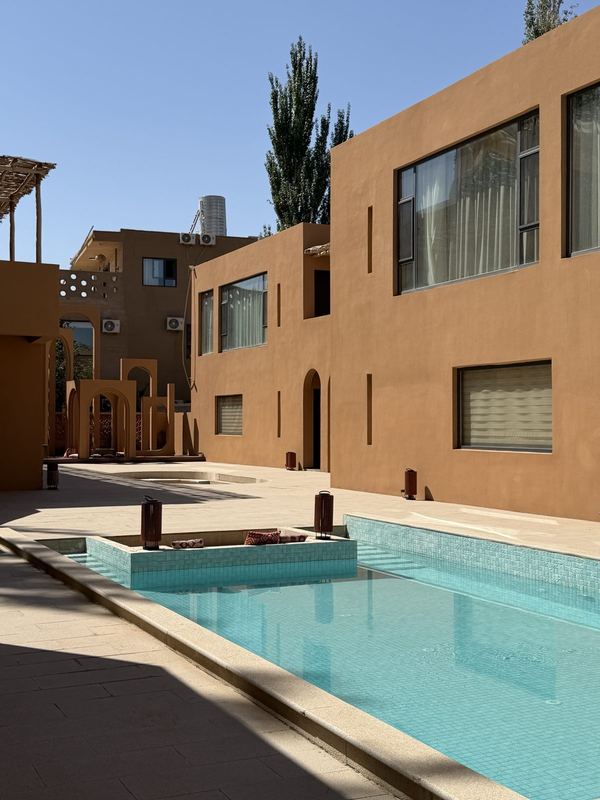
The Boman Oasis Resort is new, in a very central spot right by the dunes, and I really recommend it. The staff are very young, very nice and sweet, and nobody speaks English. Spoiler: neither does anyone else in Dunhuang, so keep a translation app ready. The little details are what I loved: a very good amenity kit with a heated eye mask, and a free afternoon tea voucher for every day of your stay. We had lunch at the hotel restaurant, all Chinese dishes, and by the time we finished our room was ready, so we could change and refresh before heading out.

The Silk Road Heritage City

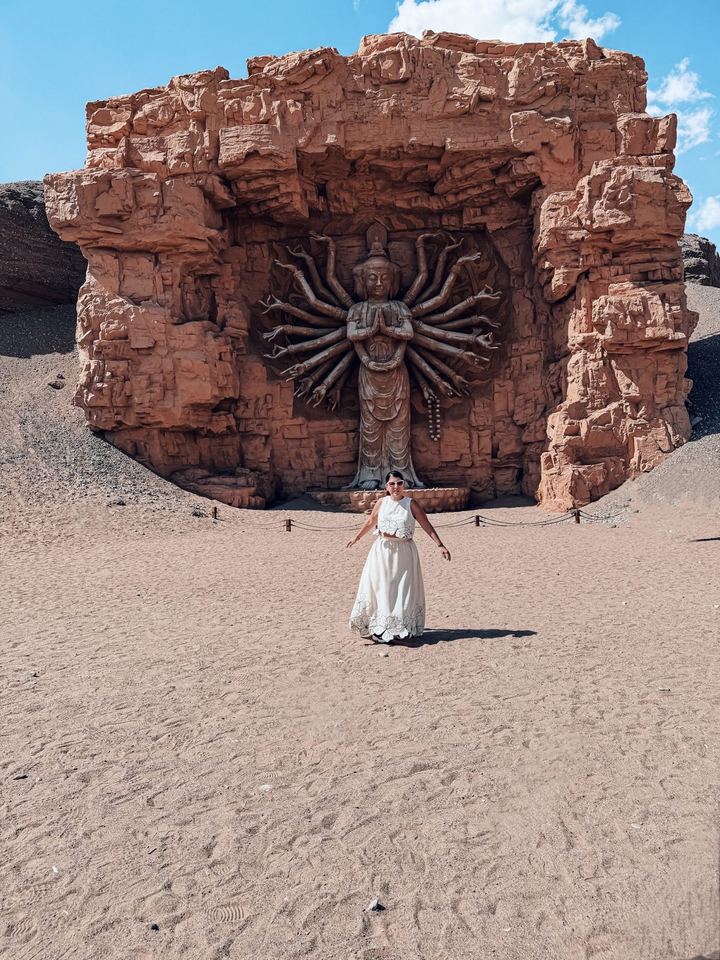
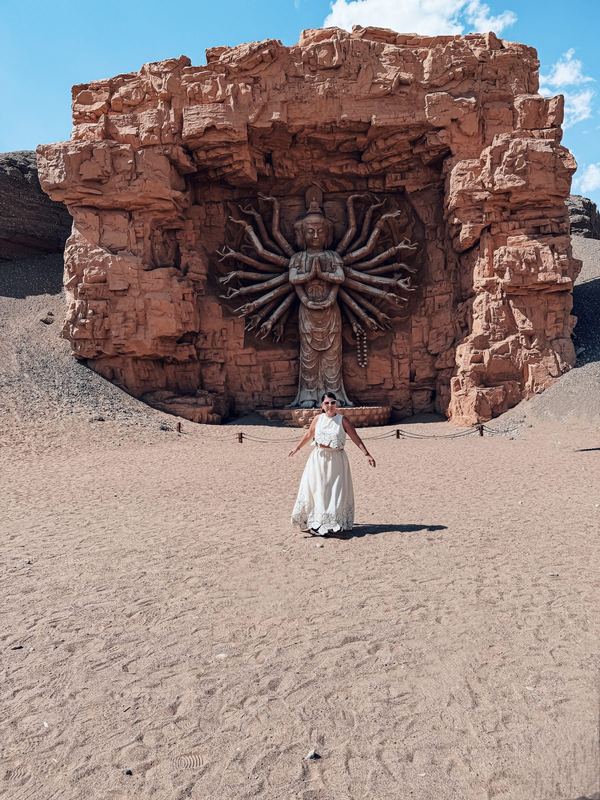
Our first afternoon in the Gobi started in front of a goddess with a thousand arms, carved into a red cliff. It takes a moment to realise the cliff is fake. Welcome to the Dunhuang Silk Road Heritage City, a film set so big you need a bus to get around it. Even in August there was no queue anywhere: the place is so massive that it simply swallows the crowds.

We got there by Didi, about half an hour from the hotel. There's no need to book ahead. Tickets are 60 CNY (about 8 USD or 31 AED) per person and you buy them on the spot. Everything inside is reconstructed: it's a huge themed park and film base at the foot of the Mingsha Shan, with replicas of palaces, temples and towns from all along the Silk Road.

What you'll find inside

  • Thousand Buddha Cliff: my favourite part. Giant figures carved into the rock, from a big Laughing Buddha to the thousand armed statue I was convinced was Shiva. It's actually Guanyin, the Buddhist goddess of mercy.
  • Shazhou Ancient City: a walled Song dynasty town with canals and bridges, recreating the famous scroll Along the River During the Qingming Festival.
  • Taihe Hall, a full size replica of the Hall of Supreme Harmony in Beijing's Forbidden City, and the Daming Palace.
  • Hakka tulou, the round earthen houses of Fujian.
  • An Egyptian temple, plus Greek and Indian areas among the eight themed zones.

Is it worth it?

Go for the photos, not for the history. There's very little explained on site and we didn't have a guide, so it's really a sightseeing stop. Read up a little before you go, and an hour and a half is enough, including plenty of stops for pictures.

Tips for the visit

Take the sightseeing bus. It's a small extra ticket (20 CNY, about 3 USD or 10 AED) and I totally recommend it, because the park is huge and the sights are quite far from each other, so otherwise it's a lot of walking.

Then back to the hotel to get ready for the dunes.
Book where I stayed

Evening

Mingsha Shan & Crescent Lake

The singing sand dunes

The singing sand dunes and the crescent shaped spring hidden between them, right on the edge of town. We booked our Mingsha Shan & Crescent Lake tickets on Trip.com.

A little history

Dunhuang was the gateway between China and the West, the oasis where the Silk Road split in two, with one branch running north and one south of the Taklamakan Desert. It was founded as a Han dynasty frontier garrison over 2,000 years ago, and the Yumen Pass, the Jade Gate where caravans left China, is about 90 km away in the Gobi. Merchants heading west stocked up on water and food here before the desert, and those arriving from the west saw its walls as the sign they had made it. Its old name, Shazhou, means "town of sand", which is also where the night market gets its name.

Crescent Lake is that oasis in miniature: a spring of fresh water hidden between the dunes, about 6 km from town. It was shrinking for decades as the water table dropped, and since 2006 it has been refilled and is slowly coming back. The dunes are called singing sands because of the low hum they make when the wind moves the sand.

Unfortunately we didn't see the lake full of water, but it was still a very impressive sight: the curve of the lake bed down below, and the mountains around it opening up the higher you climb the dunes.

How we ended up in hanfu

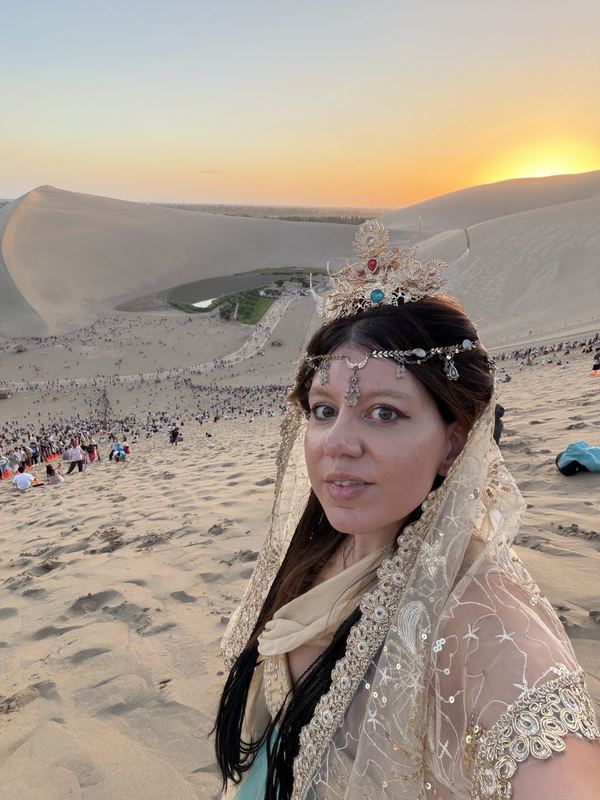
After lunch at the hotel we jumped on a Didi to the dunes, and the first thing we noticed wasn't the sand. It was the girls: dozens of them, floating towards the entrance in hanfu, the traditional dress of the Han Chinese, all flowing silk, wide sleeves and hair ornaments. We looked at each other and had the same brilliant idea. What could be more beautiful than us, dressed like that, against a golden dune at sunset?

It's very easy to do: all along the road to the entrance there are shops that rent hanfu by the hour.

What nobody tells you is that hanfu was not designed for climbing sand mountains. The dunes are massive, and going up them in a long dress, in the summer heat, is a proper workout. Our sand shoe covers definitely helped. There's also a section with wooden steps laid into the sand that makes the climb easier, but it goes very slowly, so bring a lot of patience. We reached the top very sweaty and looking a lot less like ethereal Silk Road princesses than we had planned, but the sunset pictures were worth every step.

My advice: if you want the hanfu photos, take them, go back and change, and then do the proper climb in normal clothes. It was full of people, and once again we were the only Westerners we saw.

After sunset

When the sun goes down the oasis lights up: the pavilion by the lake glows and music plays across the dunes. In the past there have also been concerts and drone shows here, but we didn't catch any of those, just the music and the lights, and it was beautiful anyway.

Plan your time

Don't underestimate how long it all takes. It doesn't look like it, but the place is huge, and we never made it down to the lake. If you want to see Crescent Lake and the pavilion up close, go there first and climb the dunes after, so you can stay at the top and enjoy the view by night. Once you've climbed, you won't walk back down to the lake. You'll just want to go home.

We went for sunset, around 8pm in August, and in summer the site closes at 10pm. We only just made it out on time.

There are several entrances with buses between them, and it gets very crowded. You need a ticket for the bus too, so buy it in advance: it speeds up the queue massively.

Other things to do on the dunes

  • Camel rides along the ridges, the classic Silk Road picture.
  • Sandboarding down the slopes.
  • Dune buggy and motorbike rides across the sand.
  • Glider flights over the dunes and Crescent Lake.

Dinner

By the time we got out it was late. You can eat at the Shazhou Night Market on the way back, but we were too tired, so we grabbed something to take away and ate it at the hotel.

What to eat in Dunhuang

The dish Dunhuang is known for is donkey meat yellow noodles: thin, chewy hand pulled noodles under a brown sauce of stewed donkey meat, mushrooms and tofu, with garlic and vinegar on the side. Wash it down with apricot skin water, a sweet and sour drink made from local apricots, sold everywhere from street stalls to supermarkets. In summer, look for niangpi, a cold dish of starch noodles with vinegar, garlic and chili oil, and for breakfast, mutton soup with flatbread to tear into it. The Shazhou Night Market has all of them, plus roast lamb skewers and dried apricots, grapes and dates to take home.

Book what I booked

4 stops · swipe or tap a card

MorningAbout 4h

Mogao Caves

The art palace in the desert

The highlight of Dunhuang and a UNESCO World Heritage Site: Buddhist cave temples carved into the cliff over roughly a thousand years, starting in 366 AD. There are 735 caves, around 490 of them decorated with murals and statues, so there's plenty to discover.

How long it takes

Plan the whole morning, and book your slot in advance, especially in summer. My ticket was at 11 and I was back at the hotel around 3pm, counting the taxi to the visitor centre and back and the shuttle on site.

The visitor centre and the films

Everything starts at the visitor centre with two films. The first tells the history of the caves. The second is an immersive show in a dome theatre, with the paintings all around you. Both are in Chinese, but they give you an English translation device that is timed with the films, so you can follow everything. They're very well done and really interesting, so don't skip them. Then a shuttle bus, already included in your ticket, takes you on a short drive to the caves.

Why the caves rotate

Your ticket includes eight caves, and they're not always the same ones. The caves are kept in a controlled environment, and the humidity and carbon dioxide that visitors bring in with their breath are monitored all the time. When the levels in a cave get too high, it closes to recover, so the eight caves on each visit rotate. I found this conservation side fascinating.

A tip for international visitors

Book the ticket for international visitors, which includes the English speaking guide. On site it isn't clear where to find your guide, but don't worry, they find you. Staff walk along the queue looking for international visitors. There were about four international visitors in the whole site, me included, and they pulled us aside, let us skip the queue and gave us our own English speaking guide, with headphones, for all eight caves. Count at least an hour and a half for the caves.

Inside the caves

Inside there's only natural light, and the guide uses a torch to show you the murals. You can't take pictures or videos inside. The paintings come from many different eras, from the early Northern Wei caves to the Tang dynasty, the golden age of Mogao, when more than a thousand caves were in use. Most were commissioned by local families, merchants and monks, who often had themselves painted on the walls as donors.

Since you can't take pictures inside, here is a glimpse of what the murals look like, from the Dunhuang Academy's own archive. On Digital Dunhuang you can walk through around 30 caves in 360° before or after your visit.

7 images

Images © Dunhuang Academy, Digital Dunhuang (e-dunhuang.com). Murals from Caves 249, 257, 57, 112, 217 and 323, and the reclining Buddha.

And to get a feel for the caves before you go, watch this:

Video: watch it on YouTube

The giant Buddha

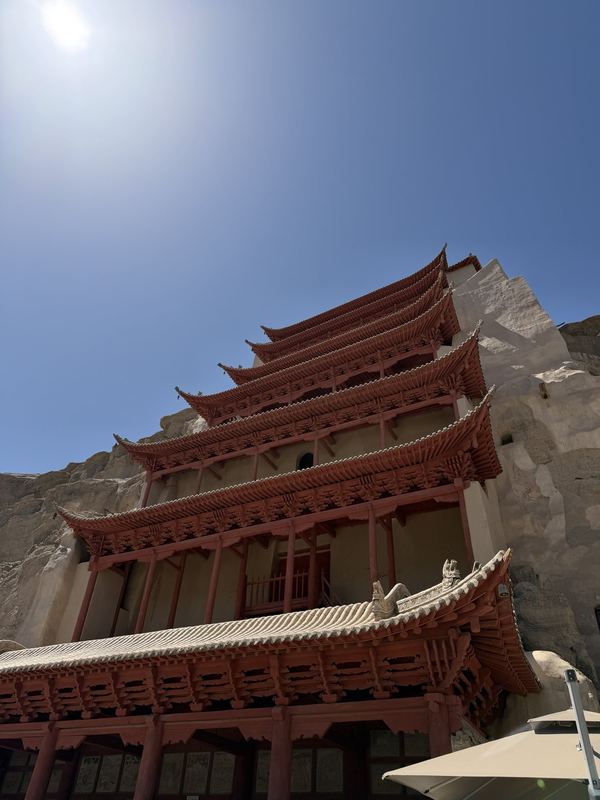
The last stop for everyone is the most famous view of Mogao, the red nine-storey pagoda built against the cliff. Inside, in Cave 96, sits a giant Buddha about 35 metres tall, carved in 695 for Empress Wu Zetian. Every tour stops here, so there's a massive queue and it's a little difficult to get in. Be patient, it's definitely worth it.

Curious about the digital caves, the VR experience of Cave 285 and the apps for China? I tell you more in my Silk Road tech post.

Book what I booked

Afternoon

An afternoon at the hotel

After Mogao I joined my friend for lunch, and we spent the afternoon on the free activities at the Boman Oasis Resort. There was a photographer taking pictures of guests around the hotel, and we painted our own fans and printed stamps with local patterns. A very cute way to slow down before the night train.

Alternative

Land art in the Gobi

Son of the Earth and Boundless, Guazhou

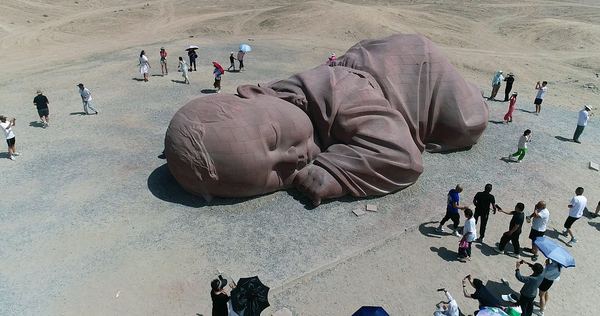
We skipped this one, but if you love land art, it's worth the detour. In the Gobi of Guazhou county, between Dunhuang and Jiayuguan, a few giant sculptures sit in the middle of nowhere, and two of them are the stars.

Son of the Earth is a sleeping baby, curled up on the desert floor and carved from red sandstone: 15 metres long, 9 wide and 4.3 high. It was created in 2016 by Dong Shubing, a professor at Tsinghua University, using 3D scans and carved blocks put together on site.

Boundless is a white palace that seems to float in the desert like a mirage: a main hall and four watchtowers made of about 6,300 steel pipes, 60 metres long and 21 high. Its shape comes from the Tang dynasty pavilions painted in the Mogao and Yulin Caves.

Images: Son of the Earth © CFP via CGTN, Boundless © CGTN

Entry is free and the area is open all day. Give it 20 to 45 minutes, and pair it with the Yulin Caves, which are in the same county. You'll need a car or a day tour from Dunhuang, as it's far from both towns.

Night5h 30

Sleeper train to Zhangye

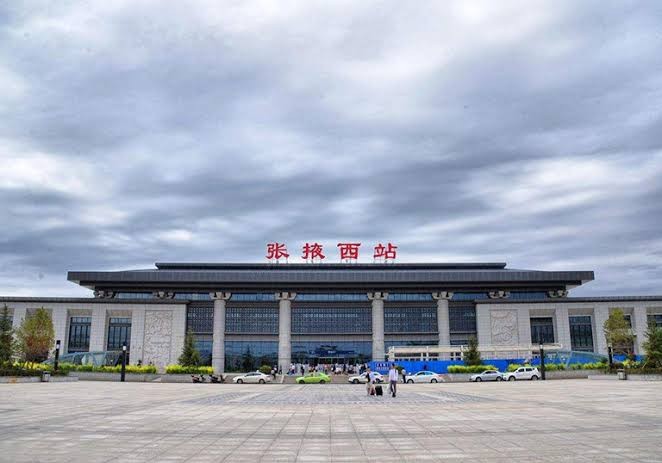
There are only around three trains a day between Dunhuang and Zhangye. You could take an earlier one in the afternoon, but we didn't know how long Mogao would take and didn't want to rush, so we took the last one, which is quite late. We arrived in Zhangye around 1am, and by the time we reached our hotel it was almost 3am, so book a hotel with 24 hour check-in.

Hard sleeper or soft sleeper?

It's a sleeper train, so you can actually sleep on the way. We wanted the soft sleeper, a cabin with four bunk beds, but Trip.com couldn't get those for us, so we ended up in the hard sleeper, an open cabin of six. Of course the space is tight. On the bunks you can't properly sit up, and I'm not very tall, so I can't imagine how anyone over 1.60 m manages. If you don't like lying down without really being able to move, I'd suggest a normal seat, even this late.

Bring your dinner

There's almost nothing at Dunhuang station, just one mini mart with local snacks, so buy something before you go if you want dinner on the train.

Train tickets only go on sale 15 days before departure. I recommend pre-booking on Trip.com: you pay upfront and they get your ticket the moment sales open. More on this in "Before you book" at the top.

2 stops · swipe or tap a card

Morning

Mati Temple

Mati Temple Scenic Area

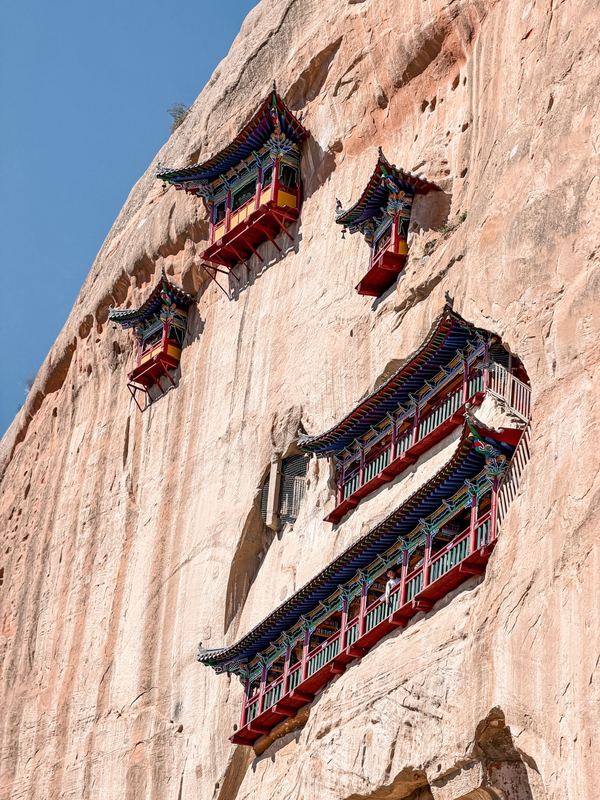
Buddhist grottoes carved high into a red sandstone cliff, connected by narrow stairs and tunnels, with the Qilian Mountains behind. The name means Horse Hoof Temple: legend says a celestial horse left its hoofprint on a rock here. The first caves go back more than 1,500 years, and the temple later became a Tibetan Buddhist monastery.

How the tour works

Mati Temple and the Danxia Rainbow Mountains are both part of the full-day Zhangye tour I booked, and the day is split in two. The departure is early, around 7am, for Mati Temple in the morning. They bring you back to Zhangye around lunchtime, then pick you up again around 4pm for the Danxia.

First impressions

After not even four hours of sleep, I was back in a van at 7am. Mati Temple is about 60 km from Zhangye, around an hour and a half by car, and on the way the landscape keeps changing and getting greener, until suddenly you're surrounded by green mountains. It was so beautiful.

I didn't know what to expect, because there isn't much information or many itineraries about Mati Temple. I knew it was near the mountains, but I didn't expect the area to be that big, and the panorama totally exceeded my expectations.

What you'll find

Mati is not one temple but a whole area, officially the Mati Temple Scenic Area, in the Sunan Yugur Autonomous County. Look for that name when you book or search on a map. It has more than 70 grottoes in seven groups spread along the valleys, and a shuttle that goes around the different stops:

  • North Temple (Puguang Temple): the main group, with the famous Thirty-Three Heavens Grottoes, the cliff with painted pavilions stacked one above the other, at about 2,600 m. A path climbs up to it from Tal Ridge, and then you climb inside the rock, from one level to the next. Here you also find the Horse Hoof Hall, with the stone said to carry the hoofprint.
  • South Temple (Shengguo Temple): smaller, with relief carvings and Tibetan style stupas.
  • Thousand Buddha Caves: right by the entrance, with niches and statues, the Cliff Carved Stupa Forest of stone pagodas carved into the rock, and Caves 1 to 4 just above.
  • Upper, Middle and Lower Guanyin Caves: three groups of caves dedicated to Guanyin, the goddess of mercy, further out past the east gate and the Dragon Eye Cave.
  • Golden Pagoda Temple: cave temples about 60 m up the cliff at the top of a long staircase. It's a separate site, 12 km beyond the Guanyin Caves, so you need a car.
  • Palace of King Gesar: a temple to the hero of the Tibetan epic, across the river below Wolong Mountain.

Along the main road there are also a racecourse, a small science museum, horse riding and, by the entrance, the Yangkuoer Commercial Street under hundreds of prayer flags. I drew the map below the same way round as the big official map at the entrance, with north to the right, so it's easy to match on site.

For directions, here is the Mati Temple Scenic Area on Google Maps. Map coverage in China is patchy, so use it to get your bearings and follow the shuttle on site.

Start with the Thirty-Three Heavens

I went straight to the Thirty-Three Heavens, and I recommend you do the same. It's the most famous and it gets crowded, and since the passages inside are so small, the queue moves slowly. So skip everything at the start, even the Thousand Buddha Caves right by the entrance, and take the shuttle straight up to the North Temple for the Thirty-Three Heavens. Then work your way backwards and see the other stops on the way back down.

Be ready for a lot of stairs. The temples are built inside the rock, so the passages and stairs run through the mountain and they're narrow and steep. At times you'll be crawling a little and helping yourself with your hands.

Give it a full day

If I did it again, I'd give the Mati Temple area a full day, to really enjoy it and take my time. Besides all the stops, there are little shops and places to eat, like the street under the prayer flags by the entrance. It was so beautiful and it surpassed all my expectations. I highly recommend it.

Afternoon

Zhangye Danxia Rainbow Mountains

Painted by time

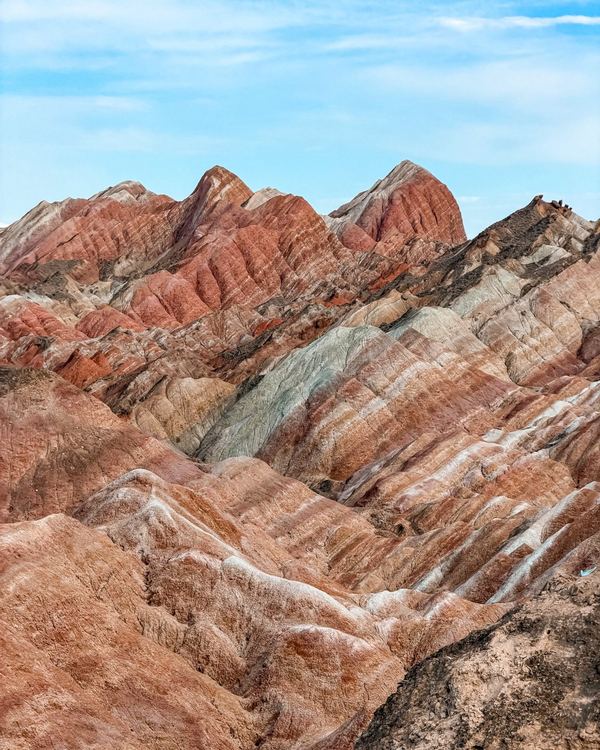
The famous striped hills: layers of red, orange, yellow and green, as if someone had painted the mountains. The colours come from minerals in layers of sandstone and mudstone laid down over millions of years, then folded and lifted by the movement of the tectonic plates and carved by wind and rain.

After Mati I went back to the city centre to rest a little, and in the afternoon we were picked up for the second part of the full-day Zhangye tour. Honestly, why go all the way to Peru and climb over 5,000 m with no oxygen, when you can come to China and get the same amazing view?

The viewing platforms

You can't wander around the park on your own. Cars aren't allowed inside, and a shuttle bus takes you from one viewing platform to the next, with stairs and boardwalks at each one. There are three gates, North, West and East, and the bus runs in a loop, with two stops where you change bus. The four main platforms are:

  • Colourful Cloud Sea Terrace: the largest, with wide views over the ridges they call the "giant scallops". The best one at sunrise.
  • Colourful Embroidery Terrace: stairs and a boardwalk along a ridge, with red, white and yellow bands draped over the slopes like silk.
  • Colourful Fairyland Terrace: small, but with some of the sharpest stripes. It's also one of the stops where you change bus.
  • Rainbow Radiance Terrace: the one they suggest for sunset, when the colours are at their strongest. Keep it for last.

Past the Rainbow Radiance Terrace the bus goes on to quieter spots, the Crouching Tiger Gorge, the Colourful Aohe Terrace and an earth forest, toward the East Gate. At the platforms there's a sign with the bus route, in English too, so take a photo of it. This is my simplified version of it.

There's also an evening light show with a separate ticket. We skipped it, because it had already been a very long day.

In summer the park is busy, and the boardwalks fill up fast toward sunset.

If I did it again

I'd split it: one full day for Mati Temple, and another afternoon just for the mountains, staying for sunset at the Rainbow Radiance Terrace and the light show after dark. The colours are at their best at sunset anyway.

And if you have an extra night and want to switch off completely, you can sleep in a yurt by the mountains at Kaoshan Daying, about 700 m from the West Gate. Most tours pick you up in Zhangye city though, so for a normal trip it's easier to stay in town.

What to eat in Zhangye

Zhangye's signature dish is cuoyu noodles, "rubbed fish" noodles: small pieces of dough rolled by hand into the shape of tiny fish, thick in the middle and pointed at the ends. They come stir fried with meat, peppers and onion, cold with garlic sprouts and chili, or in a broth. A good way to end a day in the mountains.

Book what I booked

4 stops · swipe or tap a card

Morning

Zhangye National Wetland Park

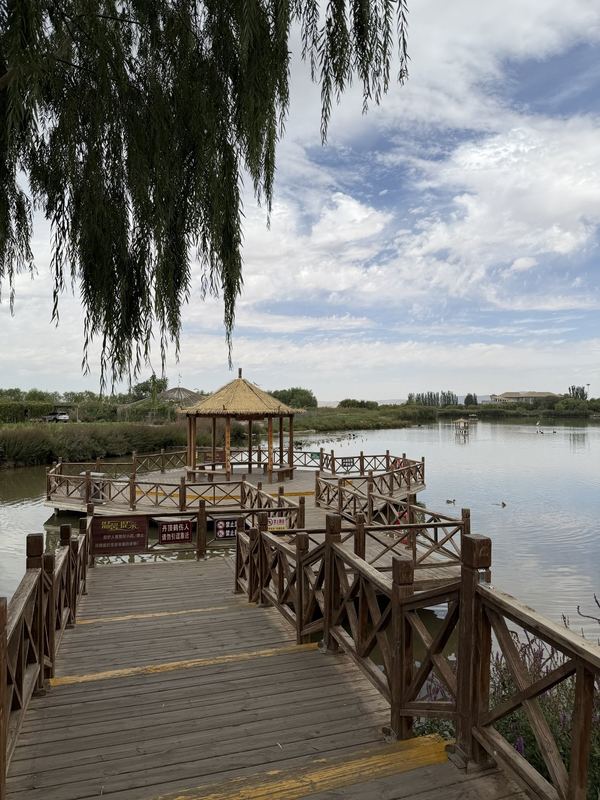
We spent our last morning in Zhangye at the National Wetland Park, on the edge of the city: wooden boardwalks and thatched pavilions over the lakes, willows, reeds and water birds. After the desert and the rainbow mountains, a calm green ending before the flight.

The park is big, with three gates, South, West and East, and the map at the entrance marks its ten best spots: lotus ponds, a sea of reeds you can cross by boat, a bird watching tower and a wetland museum. To cover more ground there are pedal surrey bikes for rent. In August the lotus ponds were in flower.

Alternative

Pingshan Grand Canyon

An alternative for your last morning

We didn't make it here, but if you'd rather end with more red rock than water, the Pingshan Grand Canyon is a good alternative to the Wetland Park: a deep red canyon outside Zhangye with plank walkways along the gorge, and far fewer people than the Danxia.

Images © CFP via CGTN

The easiest way to get there is a half-day Pingshan canyon tour from Zhangye. If you want to see both in one go, there's a full-day tour that pairs the Danxia with the Pingshan canyon 5% off with code LINECCEPIBILE5.

Book this tour Book this tour

GetYourGuide 5% off every tour with my code LINECCEPIBILE5

Alternative

Giant Buddha Temple

If you have an hour in town

We didn't go, but if you have an hour in Zhangye before your train or flight, the Giant Buddha Temple is right in the city. It was founded around 1098, under the Western Xia, and its two storey hall holds a clay Buddha lying on its side, about 35 metres long and reputedly the largest reclining clay Buddha in China, with ten disciples standing behind it. A local legend even says Kublai Khan was born here, though historians have found no evidence for it.

Allow about an hour. The site also has a 13 storey clay pagoda and the Zhangye Museum.

Evening

On to Chongqing

The evening flight lands in Chongqing just before midnight, and the next chapter begins: the Chongqing itinerary.

Good to know

How many days do you need for Dunhuang and Zhangye?

Four days is enough to see the highlights: a day and a half in Dunhuang for the Heritage City, the Mingsha Shan dunes and the Mogao Caves, the night train across Gansu, then two days in Zhangye for Mati Temple, the Rainbow Mountains and a last morning at the Wetland Park or the Pingshan Grand Canyon.

Can foreigners visit the Mogao Caves?

Yes. Book the ticket for international visitors, which includes an English speaking guide. On site it isn't clear where to go, but staff walk along the queue looking for international visitors, take you aside and give you your own guide with headphones for all eight caves.

How long does a visit to the Mogao Caves take?

Plan the whole morning. My slot was at 11 and I was back at the hotel around 3pm. The visit starts with two films at the visitor centre, with an English translation device timed to the films, then a shuttle takes you to the caves. Count at least an hour and a half for the eight caves.

Can you take photos inside the Mogao Caves?

No. Photos and videos are not allowed inside the caves, and the only light is natural light and the guide's torch.

Do people speak English in Dunhuang?

Very little. Nobody at our hotel spoke English and neither did anyone else we met, so keep a translation app on your phone.

How do you get around?

Dunhuang and Zhangye are both small and easy. We used Didi, the Chinese Uber, and it was cheap and quick. Most sights are 20 to 40 minutes from town.

What should I pack?

A scarf or a light layer for the desert wind, sunglasses for the dunes, and sand shoe covers if you don't want to bring half of the Gobi back to your hotel room.

Can I bring a power bank on domestic flights in China?

Only if it has the 3C mark, an oval CCC logo printed on the power bank itself, not just on the box. Since June 2025 security confiscates power banks without it before domestic flights, so check yours before you go or buy one with the mark in China. Keep it in your hand luggage, under 100 Wh.

Some links in this post are affiliate links. If you buy through them I may earn a small commission, at no extra cost to you.

More from ChinaSilk Road unveiled: VR caves, apps & immersive tech in China